
Sourcify
Effortlessly find and manage open-source dependencies for your projects.
Development
Freemium
From $99/mo
Smart Contract Verification
Dependency Management
Security Auditing

Real-time AI synchronization between your codebase and technical documentation.

AutoDoc represents the 2026 frontier of 'Living Documentation.' Moving beyond static README generation, it utilizes a proprietary RAG (Retrieval-Augmented Generation) architecture that creates a vector embedding of a project's entire codebase. This allows the system to monitor every pull request and commit, automatically updating technical specifications, API references, and architecture diagrams in real-time. Architecturally, AutoDoc functions as a middleware between Git providers (GitHub, GitLab, Bitbucket) and documentation hosting platforms like Docusaurus or GitBook. By leveraging multi-agent systems, it doesn't just describe code; it explains the 'why' behind architectural decisions by cross-referencing PR comments and Jira tickets. In the 2026 market, AutoDoc is positioned as the primary solution for technical debt reduction and developer onboarding, ensuring that internal knowledge bases never drift from the production source of truth. Its LLM-agnostic engine allows enterprises to toggle between OpenAI, Anthropic, or locally-hosted Llama-4 models for maximum data privacy and compliance.
AutoDoc represents the 2026 frontier of 'Living Documentation.
Explore all tools that specialize in api reference. This domain focus ensures AutoDoc delivers optimized results for this specific requirement.
Uses high-dimensional vector embeddings to map relationships between disparate microservices.
Parses class structures and dependencies to generate Mermaid.js or PlantUML diagrams automatically.
Analyzes code diffs against the entire project context to explain the 'intent' of changes.
Switches between fast models for summaries and high-reasoning models for architectural explanations.
Compares production code state against existing documentation and flags inconsistencies.
Automatically redacts sensitive strings and secrets from the generated documentation before storage.
Allows developers to narrate code walkthroughs which are transcribed and structured into docs.
Connect your Git provider (GitHub/GitLab/Bitbucket) via OAuth2.
Install the AutoDoc App to your organization or specific repositories.
Define the .autodoc/config.json file in your root directory to set documentation scope.
Select your preferred LLM model (e.g., GPT-4o, Claude 3.5 Sonnet, or Enterprise Local).
Run the initial 'Deep Scan' to generate the project's vector embedding index.
Configure the CI/CD trigger to update docs on every merged Pull Request.
Set up synchronization with external platforms like Notion or Confluence.
Invite team members to the AutoDoc Dashboard for manual review and editing.
Enable 'Drift Alerts' to notify architects when code changes deviate from documentation.
Publish the documentation portal to a custom domain with SSL.
All Set
Ready to go
Verified feedback from other users.
"Users praise its ability to handle large-scale monorepos and its seamless GitHub integration, though some mention initial vector indexing can be slow."
Post questions, share tips, and help other users.
Effortlessly find and manage open-source dependencies for your projects.
End-to-end typesafe APIs made easy.

Page speed monitoring with Lighthouse, focusing on user experience metrics and data visualization.

Topcoder is a pioneer in crowdsourcing, connecting businesses with a global talent network to solve technical challenges.
Explore millions of Discord Bots and Discord Apps.

Build internal tools 10x faster with an open-source low-code platform.

Open-source RAG evaluation tool for assessing accuracy, context quality, and latency of RAG systems.
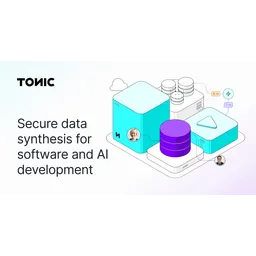
AI-powered synthetic data generation for software and AI development, ensuring compliance and accelerating engineering velocity.