
Sitecore Digital Experience Platform
A composable platform unifying content, experience, and commerce.
7d ago
Best for Content Management SystemHas API
PricingPaid
Paid
Content Management
Personalization
Marketing Automation

The open source platform for ambitious digital experiences.
Drupal is an open-source content management system (CMS) written in PHP and distributed under the GNU General Public License. It provides a back-end framework for at least 2.3% of all websites worldwide – ranging from personal blogs to corporate, political, and government sites. Its modular architecture allows for extensive customization and scalability. Key use cases include building complex websites, e-commerce platforms, and community portals. Drupal's strength lies in its robust taxonomy system, flexible content types, and powerful user management capabilities. It supports advanced workflows, multilingual content, and responsive design. The platform's architecture is built around a core set of modules, with thousands of contributed modules available to extend functionality. It is designed to handle high traffic and complex data structures, making it suitable for enterprise-level applications. The value proposition centers on providing a highly customizable and secure platform for building dynamic and engaging web experiences.
The open source platform for ambitious digital experiences.
Quick visual proof for Drupal. Helps non-technical users understand the interface faster.

Drupal is an open-source content management system (CMS) written in PHP and distributed under the GNU General Public License.
Explore all tools that specialize in manage website content. This domain focus ensures Drupal delivers optimized results for this specific requirement.
Explore all tools that specialize in build web applications. This domain focus ensures Drupal delivers optimized results for this specific requirement.
Explore all tools that specialize in workflow automation. This domain focus ensures Drupal delivers optimized results for this specific requirement.
Open side-by-side comparison first, then move to deeper alternatives guidance.
Drupal's content workflow module allows for defining states, transitions, and roles involved in content creation and publishing. It enables complex editorial processes.
Drupal's taxonomy module provides a flexible system for categorizing and tagging content. It supports hierarchical vocabularies and term relationships.
Drupal's user management system allows for defining custom roles and assigning granular permissions to users. It enables fine-grained access control.
Drupal's multilingual modules allow for building websites with content in multiple languages. It supports translation workflows and language negotiation.
Drupal provides a RESTful API for interacting with content and functionality programmatically. It enables integration with other systems and applications.
Drupal's Layout Builder module provides a drag-and-drop interface for creating custom page layouts. It allows content editors to easily arrange and style content blocks.
1. Download the latest Drupal version from the official website.
2. Upload the Drupal files to your web server.
3. Create a database for Drupal.
4. Configure the settings.php file with your database credentials.
5. Run the Drupal installation script through your web browser.
6. Choose a site name, admin username and password.
7. Configure basic site settings, such as time zone and default language.
8. Explore the admin interface and install additional modules as needed.
9. Configure themes and customize the appearance of your site.
All Set
Ready to go
Verified feedback from other users.
“Drupal is praised for its flexibility and scalability but criticized for its complexity and steep learning curve.”
No reviews yet. Be the first to rate this tool.
A composable platform unifying content, experience, and commerce.

A lightweight, stable, instantly familiar free open-source content management system forked from WordPress without the block editor (Gutenberg).

The flexible, developer-first CMS designed for total creative freedom and architectural stability.

Build engaging AI-powered forms that connect to your workflow and drive better data collection.

A cloud-based machine learning platform for building and scaling AI applications.
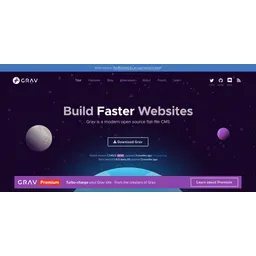
A modern open source flat-file CMS that delivers blazing-fast performance and effortless content management.