
Zotero
A free, easy-to-use tool to help you collect, organize, annotate, cite, and share research.
Data
Free
From $20/yr
Research Collection
Data Organization
Citation Generation

A comprehensive platform for modeling and simulating cell biological systems.

VCell (Virtual Cell) is a comprehensive, database-backed web application designed for modeling and simulating cell biological systems. It offers a one-stop environment for various simulation types, including deterministic (ODE and PDE), stochastic (SSA), spatial stochastic (Smoldyn), hybrid deterministic/stochastic, and agent-based simulations. VCell supports membrane flux, lateral membrane diffusion, and electrophysiology modeling. Users can define models explicitly or using graphically expressed rules. Biology-based interface simplifies model creation for inexperienced users by automatically generating the underlying math from reactions and pathways. Experienced users can directly enter mathematical equations. Complex simulations are executed on remote servers, accessible from any low-cost laptop. Geometries can be derived from 2D/3D microscope images or analytical expressions. Models are stored in a central database and can be shared among collaborators or made publicly available. Integrates with tools like ImageJ for analysis and supports rule-based modeling with BioNetGen.
VCell (Virtual Cell) is a comprehensive, database-backed web application designed for modeling and simulating cell biological systems.
Explore all tools that specialize in mathematical modeling. This domain focus ensures VCell delivers optimized results for this specific requirement.
VCell supports spatial simulations using reaction-diffusion equations and spatial stochastic methods (Smoldyn) to model cellular processes in 2D and 3D geometries.
Combines deterministic and stochastic simulation methods to model different aspects of a biological system with appropriate levels of detail and computational efficiency.
Supports rule-based modeling using BioNetGen format, allowing users to define biochemical reactions and interactions based on specific rules.
Simulation results can be directly sent to ImageJ for advanced image analysis and visualization.
VCell provides specialized tools for modeling electrophysiological phenomena, such as ion channel currents and membrane potentials.
1. Download and install the latest version of VCell from the official website (https://vcell.org/run-vcell-software).
2. Create a user account to access the VCell database and save your models.
3. Explore the example models provided within VCell to understand the software's capabilities.
4. Utilize the biology-based interface to define reactions, pathways, and geometries.
5. Choose the appropriate simulation type (deterministic, stochastic, spatial) based on your modeling needs.
6. Run simulations on remote servers and analyze the results using built-in tools or export to ImageJ.
7. Consult the online documentation and tutorials for detailed guidance on specific features and workflows.
8. Participate in workshops and training sessions to enhance your modeling skills.
9. Share your models with collaborators or make them publicly available through the VCell database.
10. Integrate VCell with other tools like COPASI and Cytoscape for enhanced analysis and visualization.
All Set
Ready to go
Verified feedback from other users.
"VCell is highly regarded for its comprehensive features and flexibility in modeling cellular systems, but some users find the interface complex to learn initially."
Post questions, share tips, and help other users.
A free, easy-to-use tool to help you collect, organize, annotate, cite, and share research.

The all-in-one AI platform for go-to-market teams to find buyers, engage faster, close more deals, and grow accounts.

E-commerce intelligence platform providing a centralized view of marketing metrics and attribution.

The global standard for fashion impact intelligence and real-time sustainability data.

The platform to connect data, processes, and teams for unified reporting.
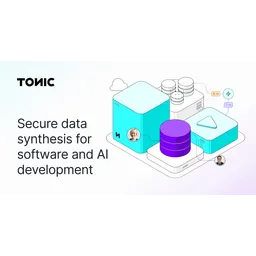
AI-powered synthetic data generation for software and AI development, ensuring compliance and accelerating engineering velocity.

Time tracking software that builds custom reports from your team's time data to maximize productivity and revenue.